
Most church growth strategies are written for churches that already have a full staff, a marketing budget, and 200 people in the seats. That is not helpful when you are running a church of 50 with one part-time admin and a worship leader who also runs the sound board.
Here is the truth: small churches grow differently than big ones. And that is okay. The tactics that move the needle for a congregation of 50 are not the same ones that work for a megachurch. They are simpler, cheaper, and more personal. They just do not get talked about enough.
This post is the playbook for the rest of us. Fifteen church growth ideas that do not require a big budget, a big team, or a big building.
Why Most Church Growth Advice Does Not Work for Small Churches

The church growth conversation has a blind spot. Most of the advice floating around online assumes you have resources you do not have. A dedicated communications person. A budget for Facebook ads. A volunteer team that can run a full visitor experience every Sunday.
According to Barna Group research, the majority of churches in America have fewer than 100 people on a given Sunday. That is not the exception. That is the norm. Yet nearly all growth content is written for the top 10%.
The result? Pastors read growth advice, feel overwhelmed, and do nothing. Or they try to copy a megachurch strategy with a fraction of the resources and burn out.
Small church growth does not start with a strategy deck. It starts with one or two things you can actually do this week. So let us get into it.
15 Church Growth Strategies That Work on a Small Budget
1. Claim and optimize your Google Business Profile. This is the single highest-impact free thing you can do. When someone searches churches near me, Google pulls from these profiles. Add your service times, photos, a welcome message, and ask a few members to leave reviews. It is local SEO for churches at its most basic, and it works.
2. Make your website do the heavy lifting. Your website is the first place a visitor goes after hearing about your church. If it is outdated, confusing, or missing service times, they will not show up Sunday. Keep it simple: service times front and center, a short what to expect section, and a way to get in touch.
3. Create a one-page visitor follow-up card. When someone visits, hand them a simple card with a QR code linking to a short form. Follow up within 48 hours with a personal text or email. We recommend FaithMade Funnels for this.
4. Post on social media once a week. You do not need to be on every platform. Pick one, find the platform that fits your church, and post once a week. Consistency matters more than volume.
5. Text your visitors. A simple Hey, it was great seeing you Sunday! text within 24 hours is more effective than any automated email sequence. People check texts. People ignore mass emails.
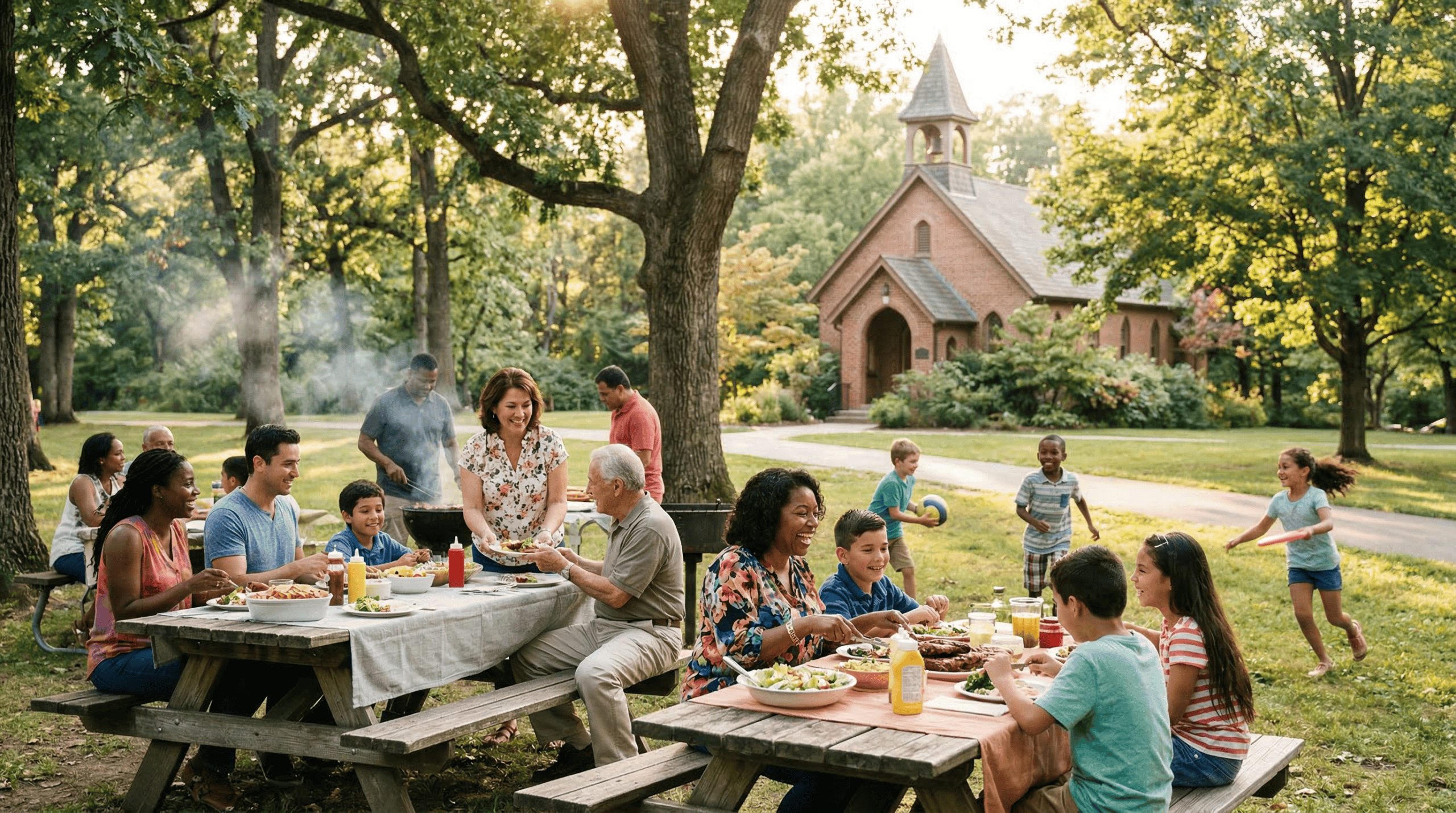
6. Host one community event per quarter. A trunk-or-treat, a back-to-school supply drive, a neighborhood cookout. People remember the church that showed up for them before they ever walked through the doors.
7. Invite people personally. Studies consistently show that personal invitations are the number one reason people try a new church. Equip your congregation to do this confidently.
8. Make your Sunday experience visitor-friendly. Walk through your front door like a stranger. Is it obvious where to go? Is someone greeting at the door? Small tweaks make a big difference for someone nervous about showing up.
9. Start a simple email newsletter. Once a month, send a short email. Highlight one upcoming event, share a quick devotional thought, and celebrate one thing God is doing in your church.
10. Partner with another small church. Co-host an event. Share resources for VBS. Two small churches working together can do things neither could alone.
11. Improve your signage. If people cannot find your building, they cannot visit. Make sure your street sign is visible, lit at night, and includes service times.
12. Equip your greeters. Train them to be warm, give clear directions, and not overwhelm a visitor with information. A smile and we are glad you are here goes a long way.
13. Share stories, not just announcements. Lead with stories. Maria joined a small group and found community after moving to town is more compelling than Small groups meet on Wednesdays at 6:30.
14. Make giving easy. Add a simple online giving option. It helps members who forget their checkbook and visitors who want to support what you are doing.
15. Ask for Google reviews. Every positive review makes it easier for the next person searching for a church to choose yours. Five good reviews can change your visibility entirely.
The One Thing Most Small Churches Get Wrong Online
Here is the mistake: treating your website like a brochure instead of a front door.
Your website is not just for current members. It is the first impression for every person who Googles your church, drives past your building, or gets invited by a friend.
If your site has not been updated in two years, if it takes five clicks to find your service times, or if it does not look good on a phone, you are losing visitors before they ever set foot inside.
You do not need a fancy website. You need a clear one. And you need it to reflect who you actually are without making a visitor work to figure that out.
Start With One Thing This Week
You do not have to do all 15 of these at once. Pick the one that feels most doable and do it before Sunday.
Church growth strategies for small churches are not about doing more. They are about doing the right things consistently. One tactic at a time. One Sunday at a time.
And if your website is the thing holding you back, that is an easy fix. Try FaithMade free and get a move-in ready church website that makes visitors feel welcome before they ever walk through your doors. Plans start at $29/mo.

